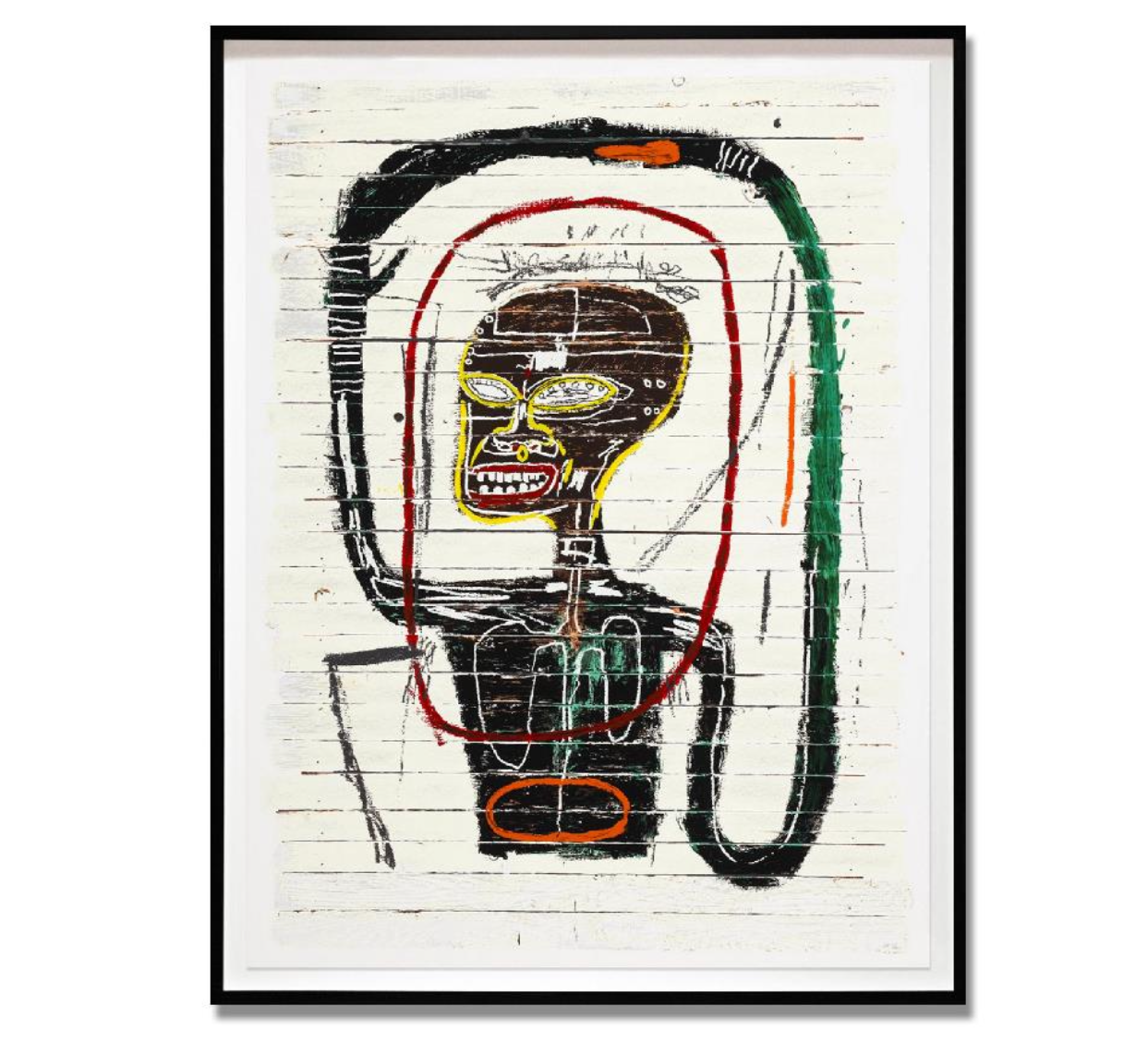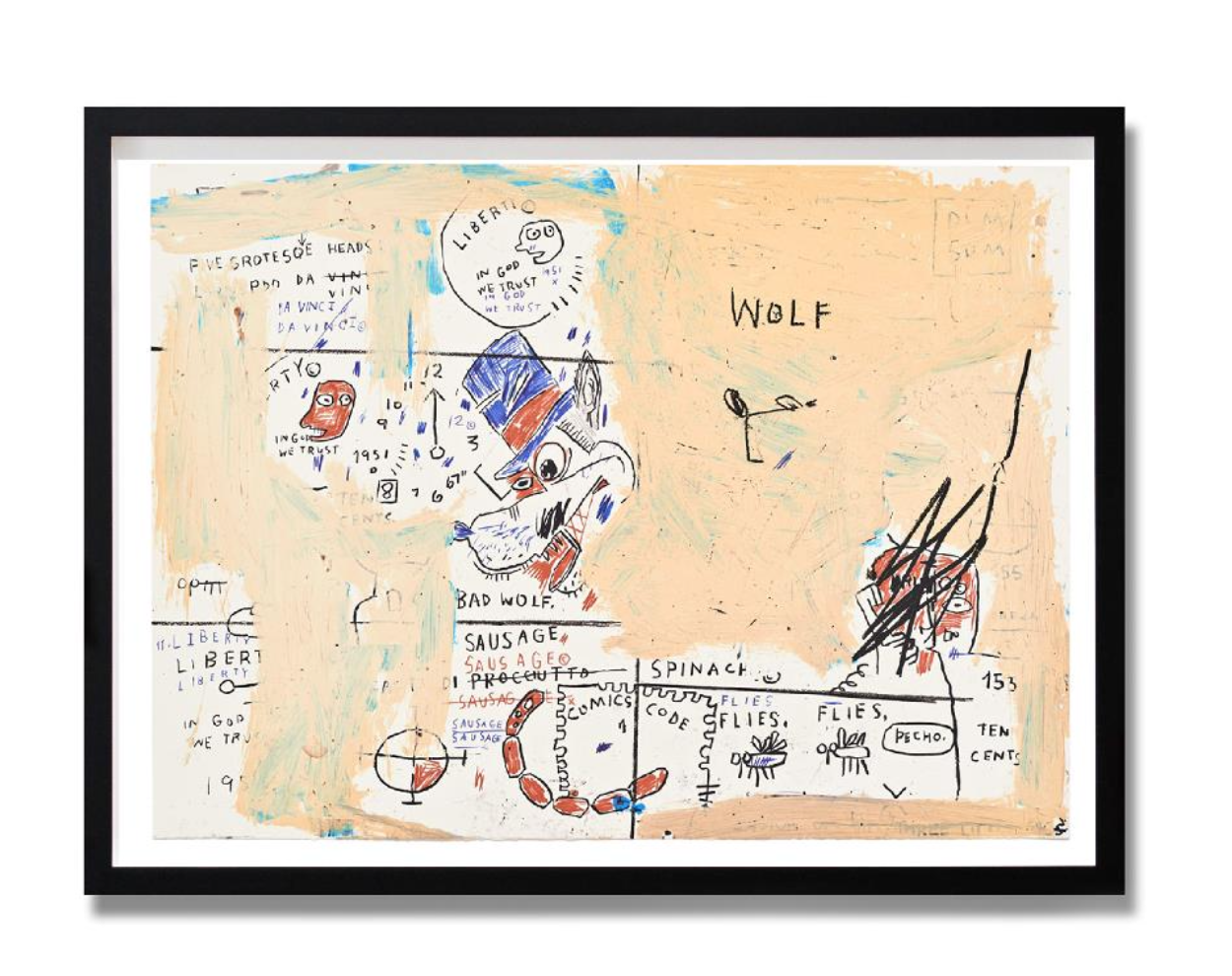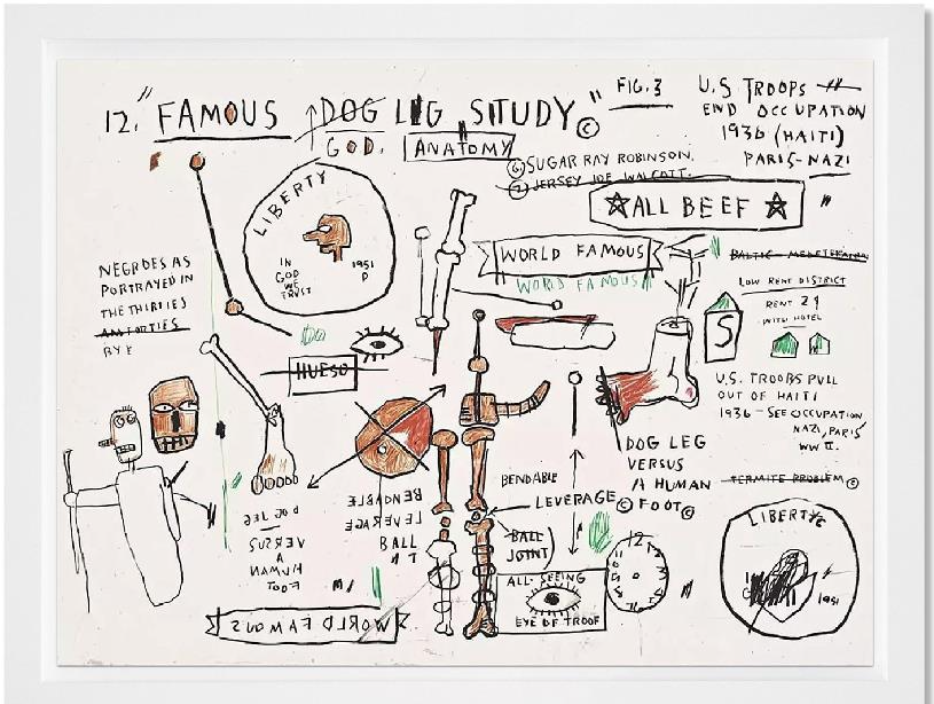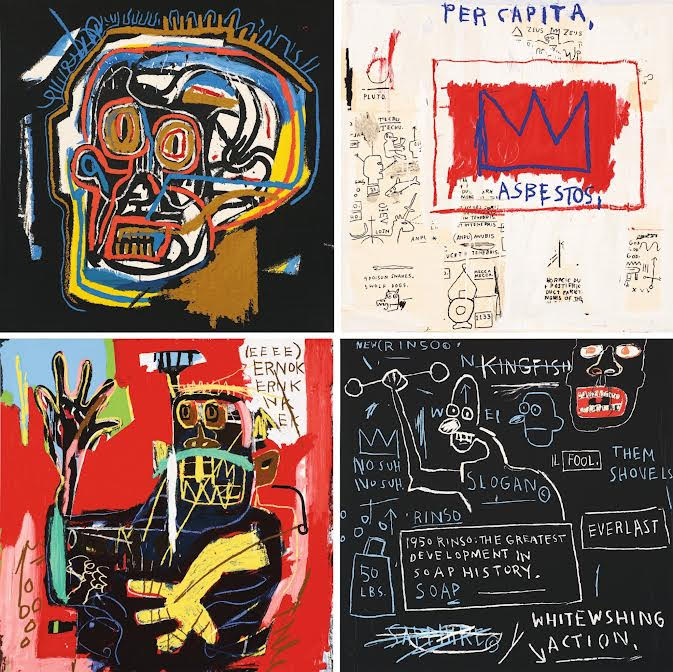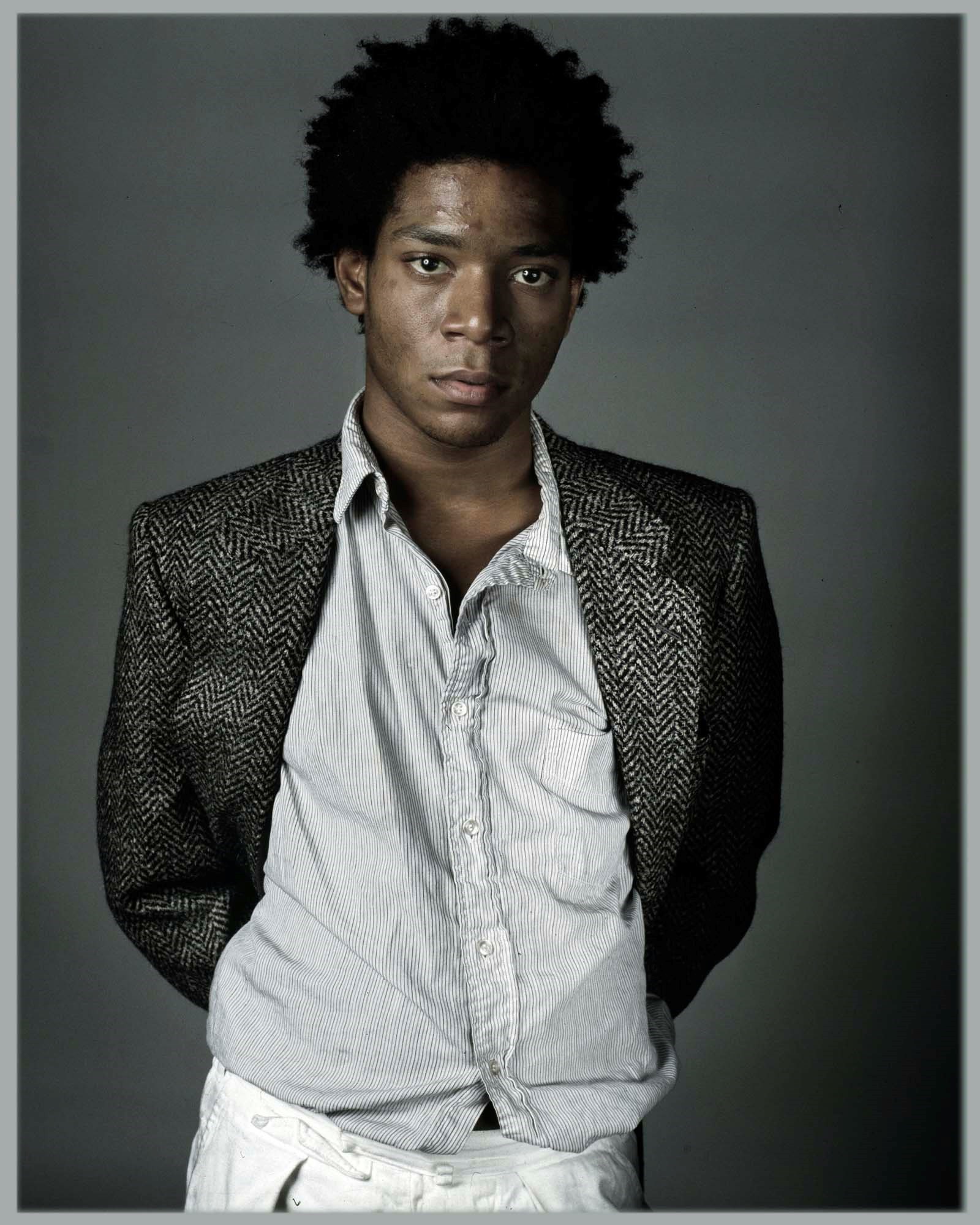
Jean-Michel Basquiat (1960-1988) was a groundbreaking American artist who rose from the streets of New York to become one of the most important figures in 20th-century art. Known for his raw, expressive style, Basquiat fused graffiti, poetry and symbolism with powerful social commentary on race, identity, power and the human condition.
Born in Brooklyn, New York, to a Haitian father and Puerto Rican mother, Basquiat was a gifted child who spoke multiple languages and showed a passion for art from a young age. He first gained attention in the late 1970s under the pseudonym SAMO©, tagging cryptic messages across downtown Manhattan.
By the early 1980s, his work transitioned from street art to canvas and he quickly became a rising star in the contemporary art scene. His pieces were bold, chaotic, and full of energy—often featuring crowns, skulls, fragmented anatomy and references to Black history, jazz and literature.
Basquiat became closely associated with the Neo-Expressionist movement and collaborated with artists like Andy Warhol, with whom he developed a close but complex friendship. Despite his rapid success, Basquiat struggled with fame and addiction.
He died of a heroin overdose at the age of 27, becoming one of the most celebrated and mythologized artists of his generation. Today, his work sells for tens of millions and continues to inspire artists, musicians and activists around the world.